Reading time · 5 minutes 閱讀時間 · 約5分鐘
The Mid-Autumn Festival falls on the fifteenth day of the eighth lunar month, when the moon is traditionally regarded as being at its fullest and brightest. In 2026, the festival falls on Friday, 25 September.
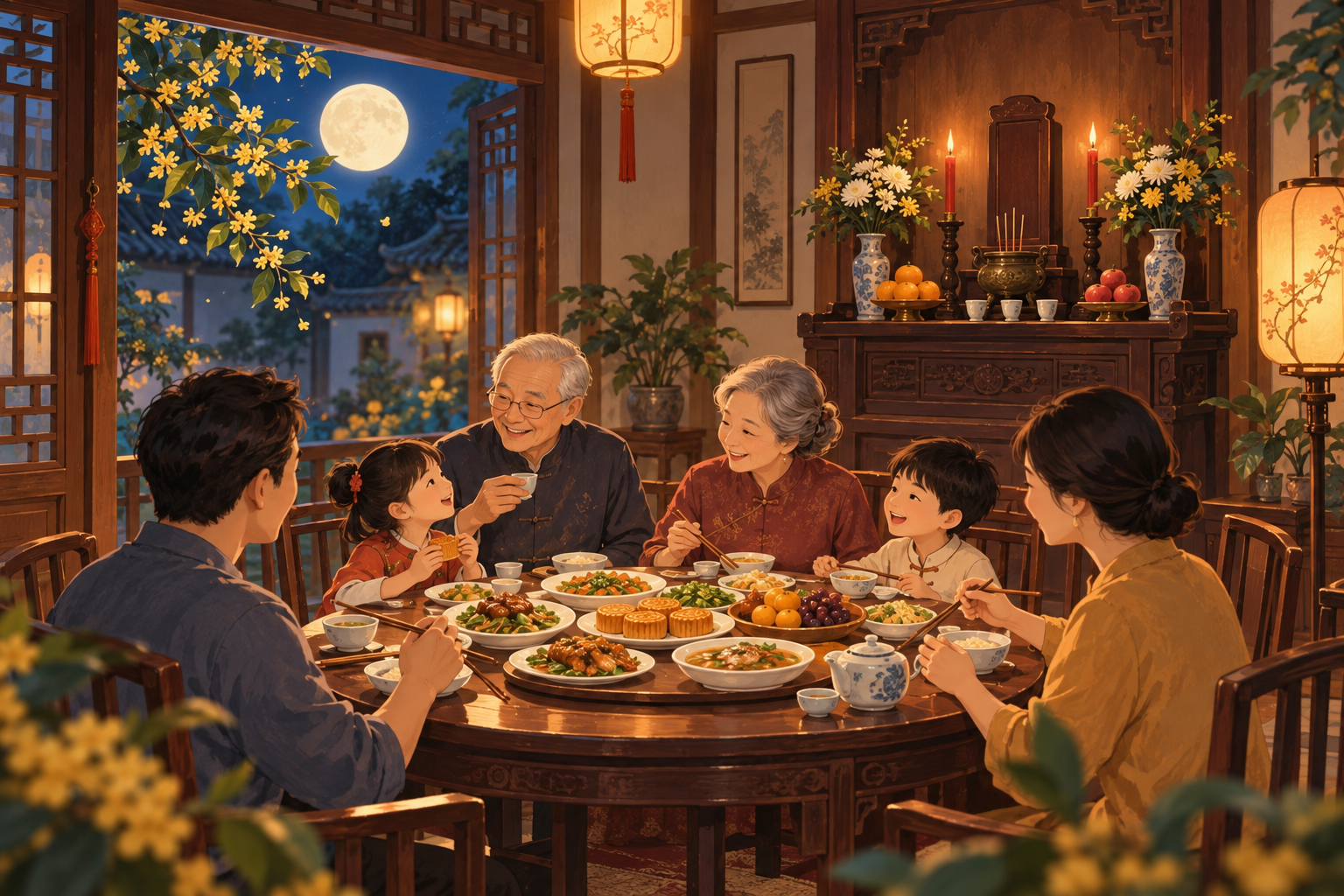
For Chinese families, the round moon represents completeness, reunion and the hope that loved ones may remain connected even when separated by distance. It is a time to gather, share food and give thanks for the relationships and blessings that sustain the family.
It can also be a meaningful occasion to remember family members who are no longer physically present. Although customs vary between regions and families, some households include their ancestors in the celebration through incense, offerings and respectful remembrance.
The meaning of the full moon
The shape of the full moon has long been associated with unity and completeness. When relatives live in different places, looking at the same moon can become a reminder that they remain part of one family.
For Chinese families living in the United Kingdom and Europe, parents, grandparents and relatives may remain in Hong Kong, China, Southeast Asia or elsewhere in the world. Some family members may also have passed away.
The festival offers an opportunity to remember that family connection is not measured only by physical distance. It can continue through affection, shared values, family traditions and remembrance.
Including our ancestors in the family reunion
Ancestral remembrance is not the same in every Mid-Autumn tradition. For some families, the occasion centres mainly on gathering with living relatives, admiring the moon and sharing mooncakes. Other families also prepare offerings for their ancestors.
Where ancestor worship forms part of the family's established tradition, descendants may respectfully inform their ancestors that Mid-Autumn has arrived and invite them to share symbolically in the family's celebration.
The principal ancestral space should honour all generations of the family's ancestors, including those whose individual names are no longer known. This recognises the seniority and continuity of the full ancestral lineage rather than remembering only the most recently departed relative.
A family may have a separate space for an individual relative where appropriate, but this should remain alongside the general ancestral position and should not replace it.
Traditional Mid-Autumn offerings
The offerings prepared for Mid-Autumn may differ according to regional customs, religious practice and family tradition. Common offerings may include:
- Mooncakes.
- Fresh seasonal fruit.
- Tea.
- Wine, where this accords with family custom.
- Cooked dishes or foods traditionally enjoyed by the family.
- Incense and candles, where they can be used safely.
Offerings should be clean, fresh and presented respectfully. Fruit should be in good condition, tea should be refreshed, and food that has spoiled should not remain on the altar.
The sincerity of the offering is more important than its price or size. A simple cup of fresh tea and a small portion of mooncake, offered with genuine remembrance, may hold more meaning than an extravagant display prepared without care.
Mooncakes and the meaning of sharing
The round shape of a mooncake reflects the symbolism of the full moon: completeness, unity and reunion. Mooncakes are commonly divided and shared among family members, allowing everyone to receive a part of the same whole.
Where mooncakes are offered to ancestors, they may first be placed respectfully on the altar before being shared by the family according to its established custom. Practices concerning the use of offerings after worship vary, so families should follow their inherited tradition or seek guidance if uncertain.
Remembering relatives who cannot be present
Not every family can gather physically at Mid-Autumn. Relatives may live in different countries, work away from home or be unable to travel. A family may also feel the absence of someone who has recently passed away.
The festival does not require families to hide their grief. Remembering someone who has passed away can exist alongside appreciation for the relatives who remain. Acknowledging both absence and presence can make the gathering more sincere.
Families may share memories, prepare a dish associated with the person, look through photographs or explain family stories to younger generations. These simple acts allow someone's influence and values to remain part of the family.
Teaching younger generations
For children growing up outside Asia, festivals can become an important way of learning about their family history and cultural identity.
Adults can explain why the family gathers, why the moon is significant, why food is offered before it is shared, and why respect is shown at the ancestral altar.
Children may participate by helping to arrange fruit, preparing tea, placing mooncakes on a clean plate or offering a respectful bow under the guidance of their elders.
The purpose is not simply to teach a sequence of actions. It is to help younger generations understand the values beneath them: gratitude, respect for elders, remembrance of family origins and responsibility towards future generations.
A festival of gratitude and continuity
Mid-Autumn is often described as a festival of reunion, but reunion is not limited to those seated around the same table. It also includes remembering where the family came from, honouring the generations that made the present possible and passing family values forward.
By gathering with living relatives and respectfully remembering those who came before, families bring past, present and future together beneath the same full moon.
The most meaningful celebration may simply be a shared meal, a cup of tea offered with care, a family story told to a child and a quiet moment of gratitude before the ancestral tablet.
中秋節:團圓、感恩與敬念祖先
中秋節在每年農曆八月十五舉行。傳統上,這一天的月亮被視為一年之中最圓、最明亮的時候。2026年的中秋節是9月25日,星期五。
對華人家庭而言,圓月象徵圓滿、團聚,以及即使親人相隔千里,彼此之間仍然保持連繫的願望。中秋節是家人共聚、分享食物,並感謝親情與福澤的日子。
中秋習俗因地區及家庭傳統而有很大差異,但部分家庭亦會在節日期間上香、奉上祭品及追思先人,讓已離世的家人一同參與這個團圓的節日。
圓月的意義
圓月自古象徵團聚與圓滿。當親人身處不同地方,抬頭觀看同一輪明月,也能提醒彼此仍然屬於同一個家庭。
對居住在英國及歐洲的華人家庭而言,父母、祖父母及其他親人或許仍然身處香港、中國、東南亞或世界其他地方,亦可能已有家人離世。中秋節提醒我們,親情並不只取決於彼此之間的距離;愛護、共同的價值、家族傳統及追思,都能讓這份連繫延續下去。
讓歷代祖先參與團圓
不同家庭的中秋習俗並不完全相同。有些家庭主要與在世親人聚會、賞月及分享月餅;另一些家庭則會準備祭品供奉祖先。
如果祭祖是家族原有的傳統,後人可以在祖先神位前恭敬稟告中秋節已到,並以祭品表達邀請,讓歷代祖先象徵性地一同過節。
家中主要的祖先供奉位置應敬奉家族歷代祖先,包括後人已無法知道姓名的先人。這樣才能尊重整個家族的輩分與承傳,而不是只追念最近離世的親屬。
如有合適的家庭或儀式原因,可以另設個別先人的供奉位置,但仍應與歷代祖先的總神位並存,不宜取代歷代祖先的共同位置。
傳統中秋供品
中秋節所準備的供品,可因地方習俗、宗教傳統及家族習慣而有所不同。常見供品包括月餅、新鮮時令水果、茶、酒、熟食或家族傳統菜式,以及在安全情況下使用的香燭。
供品應保持乾淨、新鮮,並以恭敬的態度擺放。水果應完整良好,茶水應適時更換,已變壞的食物亦不應繼續留在神枱上。
供品是否昂貴或豐富並不是最重要。真誠地奉上一杯新鮮茶水及一小份月餅,用心追念祖先,其意義可能遠勝於缺乏誠意的鋪張供奉。
月餅與分享的意義
月餅呈圓形,呼應圓月所代表的圓滿、團結與團聚。家人把月餅切開共同分享,每人都得到整體的一部分,亦象徵一家人彼此相連。
如果家中有以月餅供奉祖先的習慣,可先把月餅恭敬地放在神枱上,供奉完成後再按照家族傳統處理或與家人分享。供奉後如何處理祭品,各個家庭的做法可能不同;如有疑問,可請教有經驗的宗教師傅。
思念未能團聚的親人
並非每個家庭都能在中秋節親身團聚。親人可能居住在不同國家、離家工作,或因其他原因未能同行。對於近期有親人離世的家庭,中秋團聚亦可能令思念更加深切。
中秋節並不要求家人隱藏悲傷。追思已離世的親人,可以與珍惜仍然在身邊的家人同時存在。家人可以分享回憶、準備先人生前喜愛的食物、觀看舊照片,或向年輕一代講述家族故事。
向下一代傳承
對於在亞洲以外地區成長的孩子而言,傳統節日是認識家族歷史及文化身份的重要機會。
長輩可以向孩子解釋家人為何團聚、圓月有何意義、為何食物先作供奉才與家人分享,以及為何要在祖先神位前表達敬意。孩子亦可以在長輩指導下協助擺放水果、準備茶水、把月餅放在乾淨的碟上,或向祖先恭敬行禮。
傳承並不只是教導孩子完成一連串動作,更重要的是讓他們明白當中的價值:感恩、敬老、毋忘家族根源,以及對下一代所肩負的責任。
感恩與承傳的節日
中秋節常被稱為團圓的節日,但團圓並不只限於坐在同一張桌旁的人。它亦包括毋忘家族根源、感謝歷代祖先所作的付出,以及把家族的精神與價值傳承下去。
家人與在世親人相聚,同時恭敬追念歷代祖先,便能在同一輪圓月之下,把家族的過去、現在與未來連繫起來。
最有意義的中秋節並不一定需要鋪張。它可以是一頓家人共享的晚飯、一杯用心奉上的茶、一個講給孩子聽的家族故事,以及在祖先神位前真誠感恩的一刻。