
Reading time · 5 minutes 閱讀時間 · 約5分鐘
Honouring our ancestors is an important Chinese tradition rooted in remembrance, gratitude and respect for our family origins. It creates a meaningful connection between past, present and future generations.
The meaning of ancestral blessings
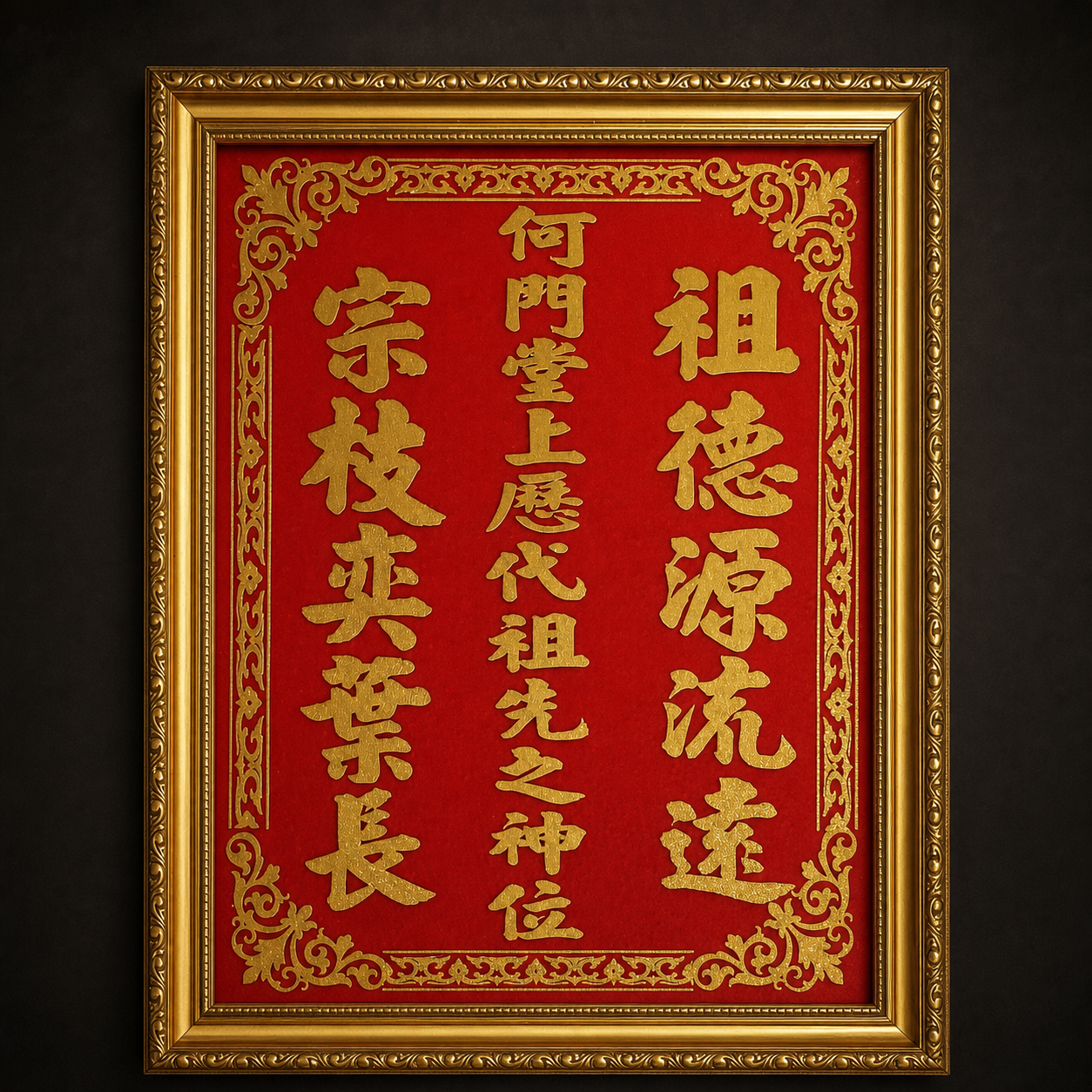
Chinese tradition speaks of ancestral blessings (福蔭)—the blessings, protection and positive legacy passed from virtuous ancestors to their descendants.
Ancestral blessings do not refer only to material prosperity. They can also be expressed through family harmony, emotional strength, the wellbeing of future generations and the continuation of honourable family values.
“May the virtues of our ancestors be remembered, and their blessings continue through the generations.”
How honouring ancestors benefits families
- It expresses gratitude, respect and affection for those who came before us.
- It teaches younger generations about their family history and origins.
- It preserves filial respect, integrity, kindness and family responsibility.
- It strengthens family relationships and a shared sense of belonging.
- It offers comfort and a meaningful focus for remembrance after bereavement.
- It brings relatives together during festivals and important family occasions.
- It preserves family stories, wisdom and cultural identity.
- It encourages every generation to live well and create blessings for the next.
More than asking for good fortune
Ancestral blessings mean more than asking our ancestors for good fortune. Their deeper meaning lies in inheriting our ancestors’ virtues, honouring their teachings and continuing their positive legacy through our own conduct.
The most enduring ancestral blessing is a good family legacy, protected and strengthened by every generation.
供奉祖先與福蔭後代
供奉祖先,是華人文化中慎終追遠、飲水思源的重要傳統。華人傳統常說:「祖德流芳,福蔭子孫。」
「福蔭」是指先人累積的德行、恩澤與良好家風,惠及後代子孫。它不單代表物質上的福氣,也包含家庭和睦、身心安穩、後輩順利成長,以及家族精神和優良品德的延續。
真正長久的福蔭,是一代又一代人共同守護的家風。祖先以德行庇蔭後人,後人也以孝心、正直與善行回報先人,讓這份福澤繼續傳承。