

Appearance
Some traditions avoid cutting hair or shaving until after the funeral, reflecting a period in which grief takes priority over appearance.

Remembrance
The meaning of offerings, prayers and acts of remembrance observed after the funeral and throughout the family’s continuing traditions.
← Back to After Life祭祀與追思
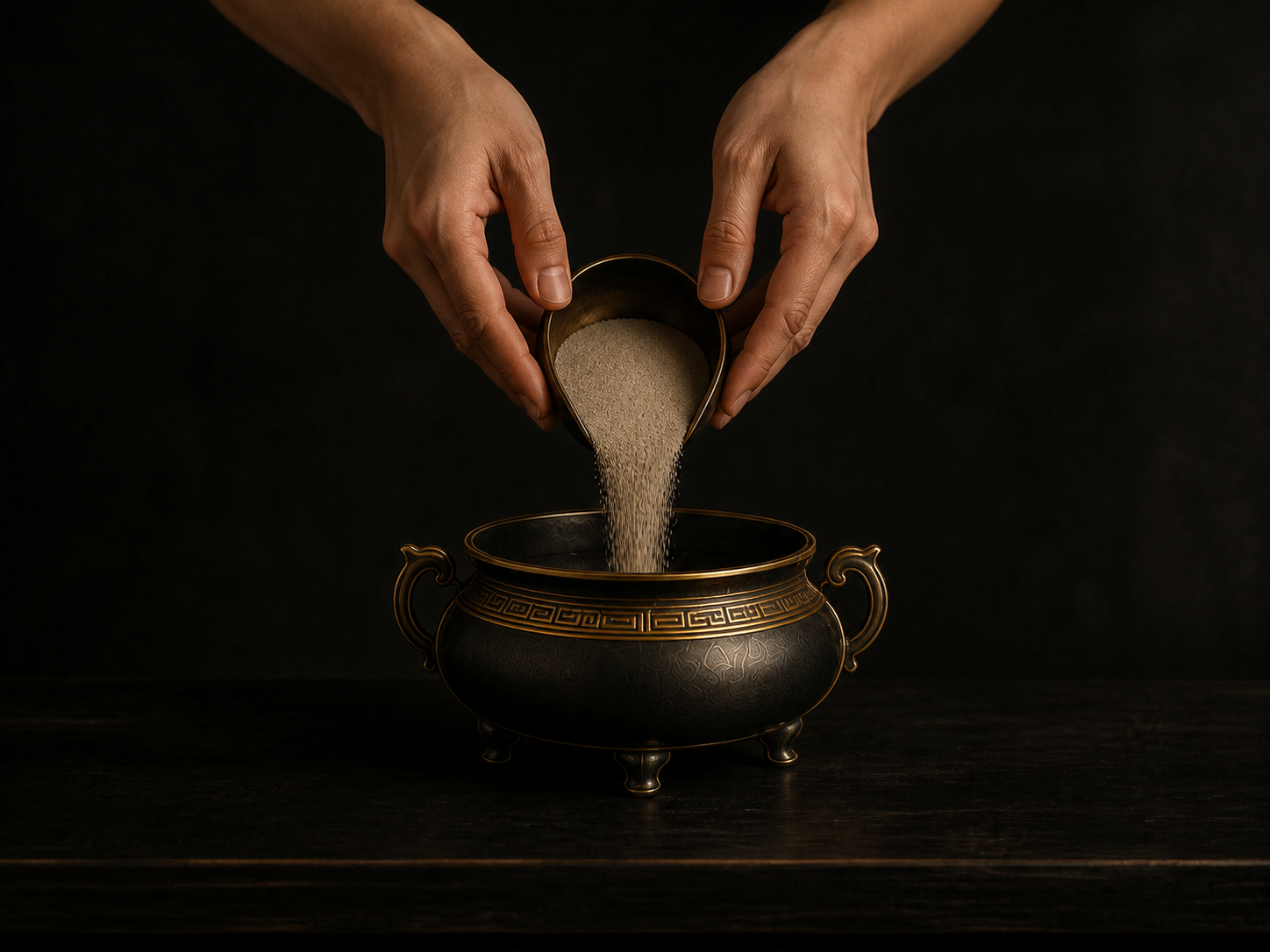
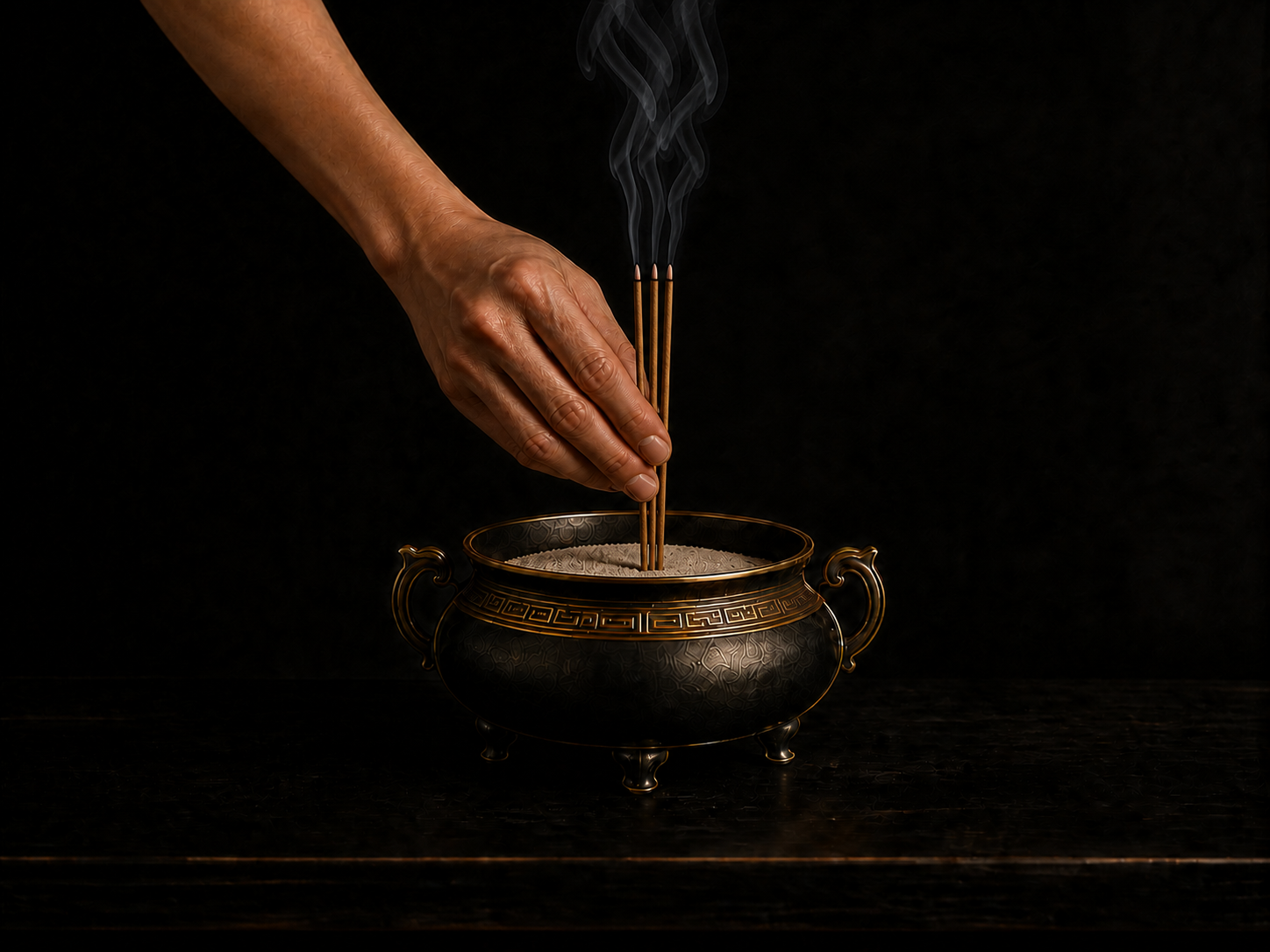
From the day a loved one passes, many families begin a period of mourning and create a shrine at home. Offerings are made with the same care and hospitality that would have been shown while they were physically present.
Practices vary by family, region and teaching. Hinzen’s ministers can explain the traditional arrangement and help you decide how fully you wish to observe it.
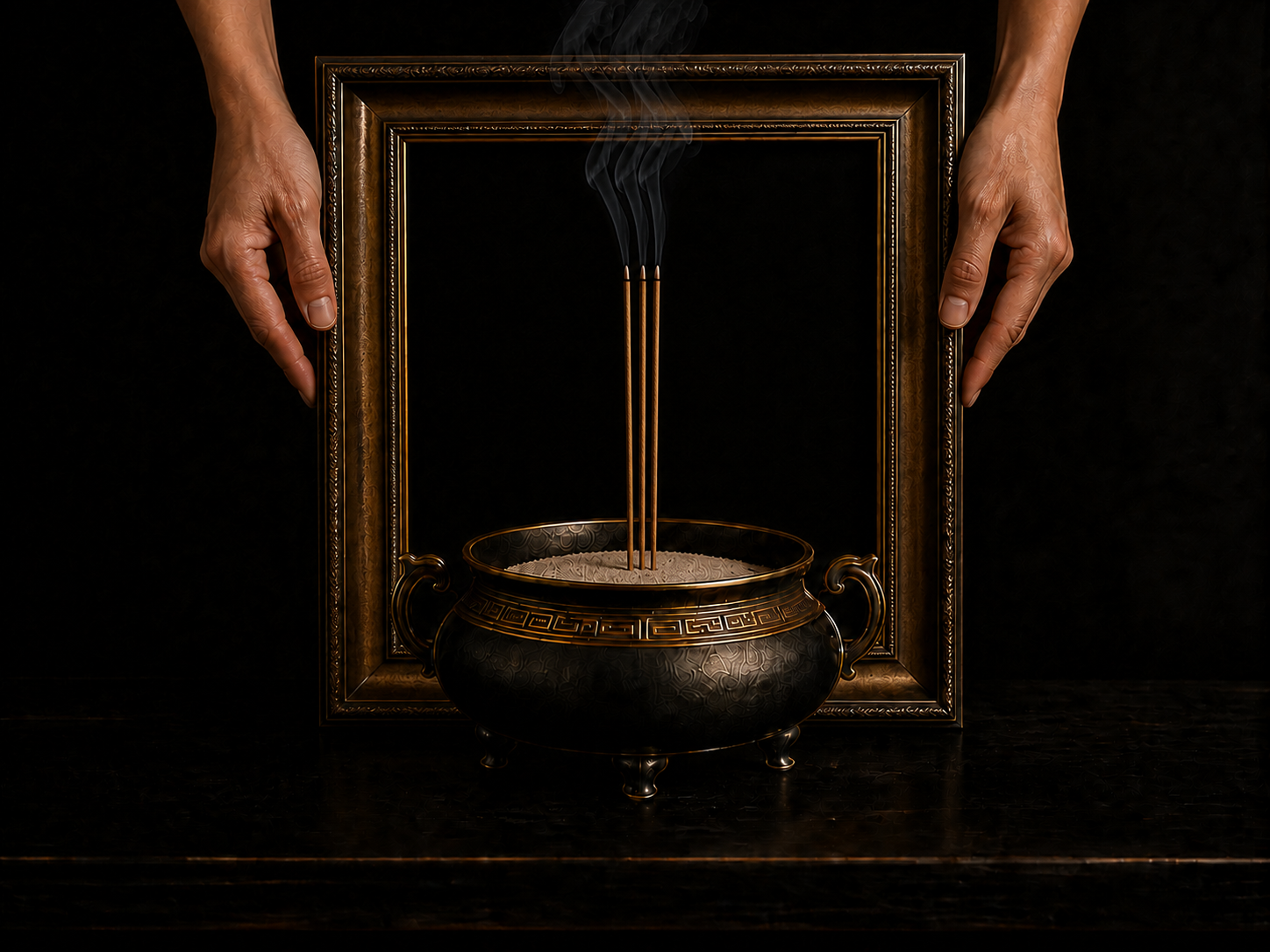
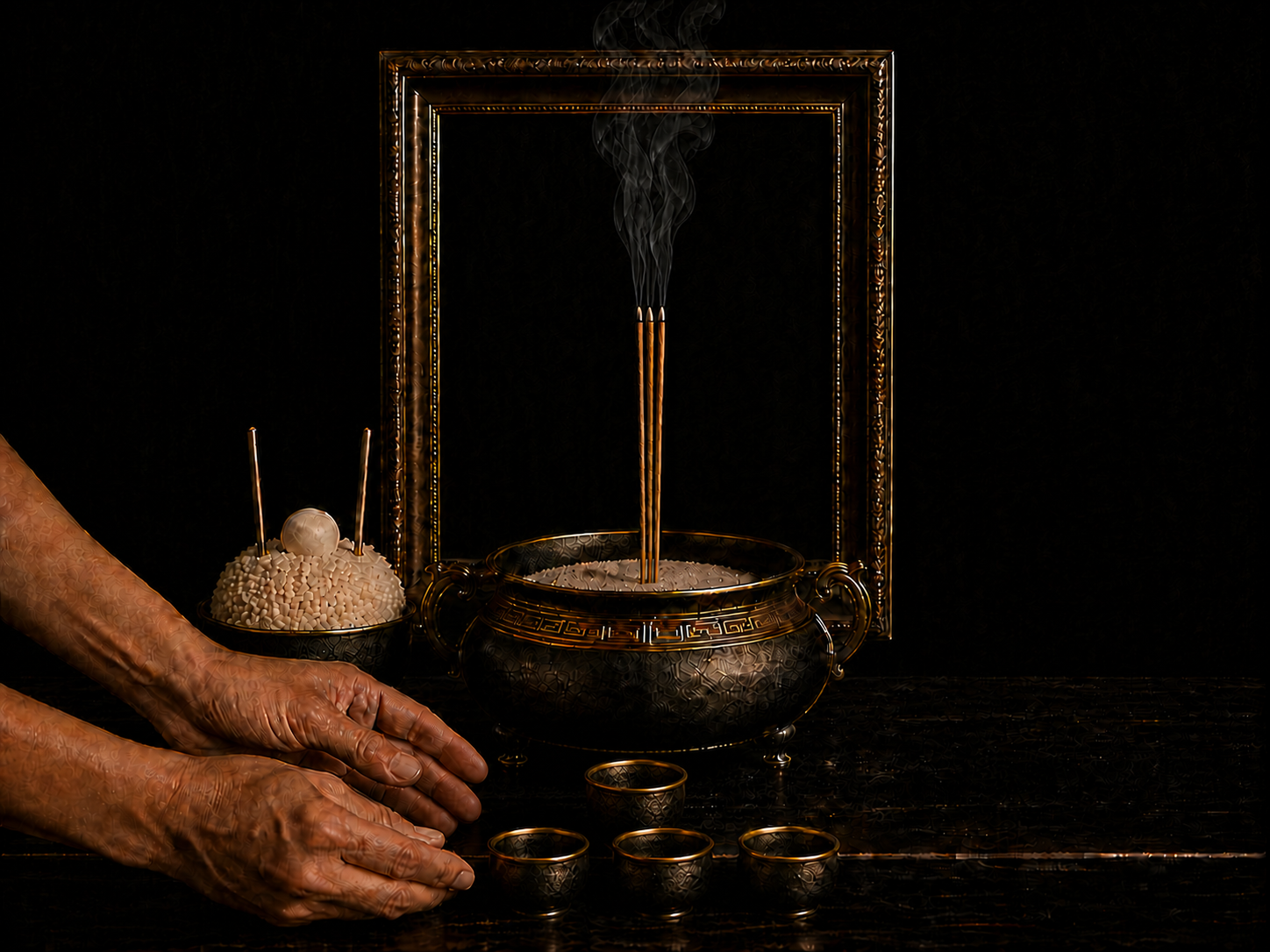
The home shrine
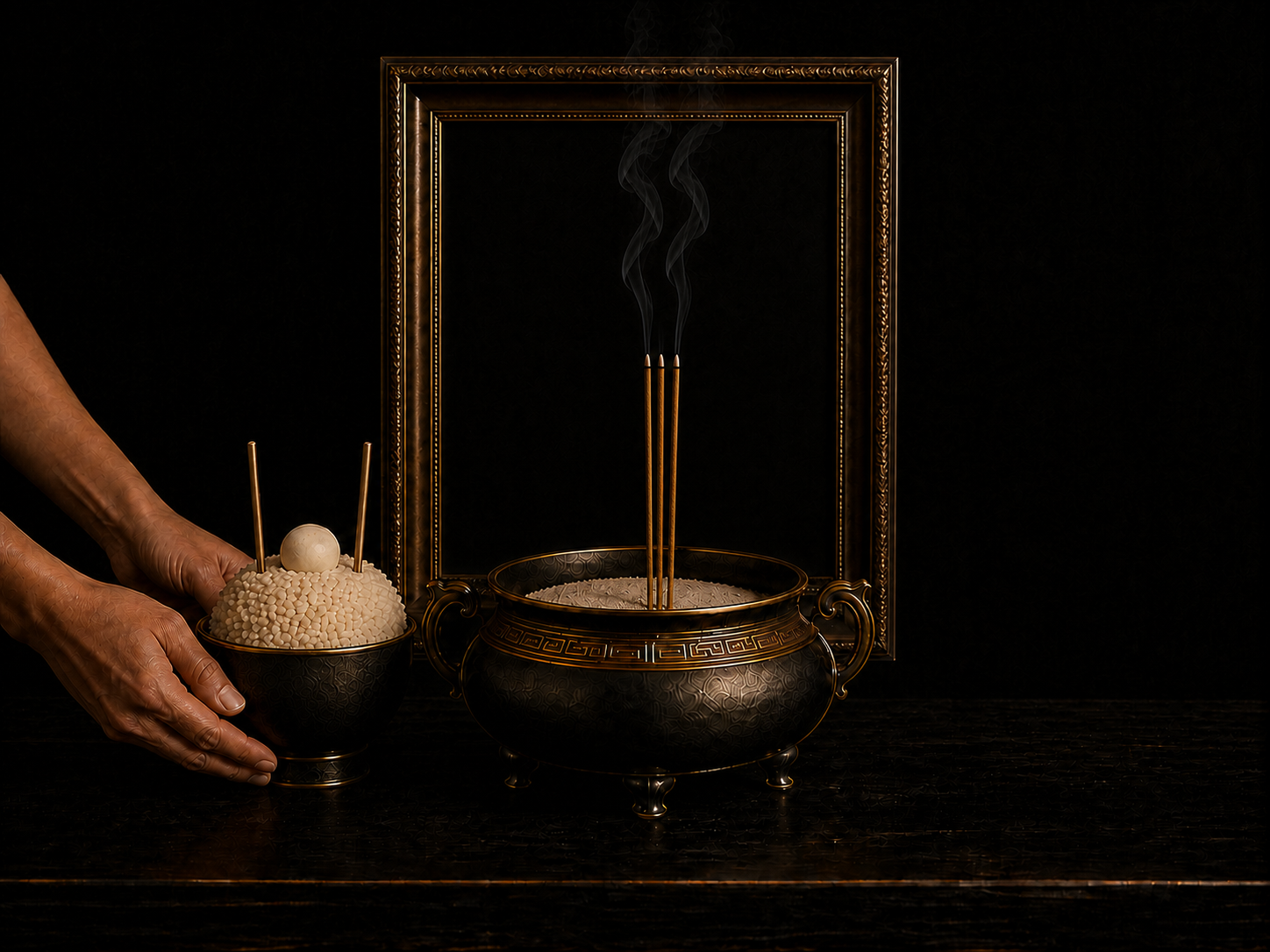
The shrine offers a dedicated place for the family to remember their loved one and carry out the daily and weekly observances.
The head rice · 頭飯
The domed bowl of glutinous rice and egg is traditionally understood as an offering to the underworld officers, 鬼差, asking that they treat the spirit kindly. It remains at the shrine until the funeral and may then accompany the coffin.
Families may also place a portion of each meal at the shrine during the initial mourning period, commonly for 49 days and sometimes through 100 days.
Traditional mourning customs
Some traditions avoid cutting hair or shaving until after the funeral, reflecting a period in which grief takes priority over appearance.
Weddings, birthdays and other celebrations may be avoided or postponed during the mourning period as a sign of respect.
Some families refrain from visiting other households during mourning because of traditional beliefs surrounding misfortune.
The weekly return
The day of passing is counted as day one when it occurs before 11pm. The offering begins on the sixth night, ready for the spirit’s traditional return after midnight.
The remembrance schedule
This is a traditional guide. Your minister may adapt it according to your family, ceremony and regional customs.
Three bowls of rice with ginger and salt. The offering is intentionally simple for the first weekly return.
Three bowls of rice and three bowls of meat, traditionally sliced pork or a prepared chicken.
The same food offering as the second week. A family may also discuss a traditional paper house with the minister.
No food offering is made. Fresh tea and wine are placed at the shrine and joss paper may still be offered.
The second-week food offering is repeated. A paper house may be considered if one has not already been arranged.
Traditionally associated with the filial contribution of daughters. Modern families may share these duties in whichever way feels appropriate.
Three bowls of rice, three bowls of glutinous rice-ball dessert and three bowls of meat.
Three bowls of rice and the three meats: a whole chicken, pork belly and fish. The offering may take place in the late afternoon or at the family’s usual dinner time.
The hundred-day food offering is repeated as part of the family’s anniversary remembrance.
The same offering is made. Traditional counting includes the year of passing as the first year.
Completing the mourning period
After the funeral, simple incense and shrine care may continue through 49 days, 100 days or the first anniversary. A later ritual can formally complete the mourning period and guide the spirit’s accession to the ancestor altar.
If the full funeral ceremony was not possible earlier, speak with a Hinzen minister. Some formalities may be completed during the hundred-day or anniversary ceremony.
Practical funeral arrangements
Hinzen has come together with Everlay through the same people and shared leadership. Hinzen provides the religious teachings, ministers and traditional ceremonies, while Everlay provides complete funeral director services. This close partnership allows the ceremonial and practical arrangements to be considered together from the very beginning.
Explore Chinese funeral arrangements with EverlayWant to learn more?
We can explain the teachings in more detail and help your family understand the traditions relevant to you.
Contact us